The Discipline of the Hand
The first in a series on my four children, and what a new generation is teaching me about creativity, craft, and the questions raised by AI. I begin with my daughter Amanda, an architect.
My daughter Amanda is an architect.
I have four children, and I am starting to write about them here, because they are teaching me something about how a new generation makes and moves through the world. I will begin with Amanda, because her path runs so close to my own, and yet arrives somewhere I did not expect.
She is licensed and practicing, designing commercial retail spaces at Arcadis…a firm large enough to shape skylines, precise enough to worry over the width of a doorway. I watch her work and I recognize something I have spent my whole career chasing: the willingness to do the unglamorous middle of things. Not the sketch, not the ribbon-cutting…the thousand quiet decisions in between that no one sees but everyone feels.
You can stand inside some of those decisions. Walk into the Capital One Café on M Street in Georgetown, where Amanda was a major part of the design team, and you are inside her work…the warm wood, the light pulled deep into the room, and a patterned mosaic floor laid tile by careful tile. She has always understood tile. The people who pass through will never know whose hand shaped the space around them. They will only feel that it holds them well. That is the point.
 Visit the space
Capital One Café, Georgetown
Visit the space
Capital One Café, Georgetown
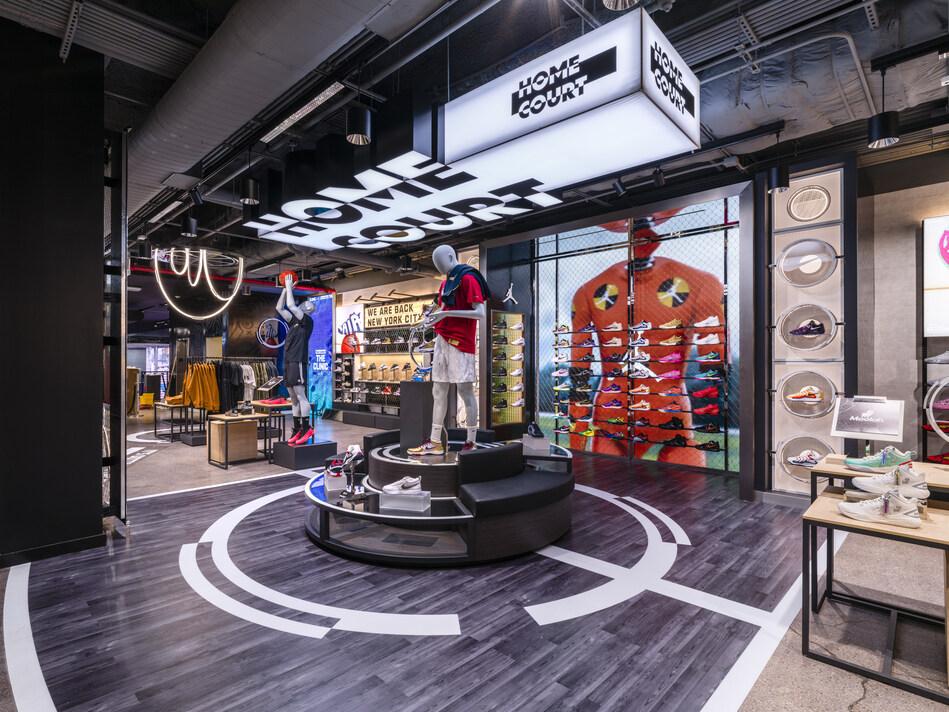
Lately her hand has been on something bigger. When I asked her what she is proudest of right now, she did not hesitate…the work she has led for Foot Locker. She was a major part of the team behind the Champs Sports reimagined store concept, and the Foot Locker Home Court, the basketball destination that reopened the flagship on 34th Street in New York with Nike and Jordan Brand. She talks about it the way she talks about the roof she drew in Seoul, quietly, and with the pride of someone who did the real work. It has also been, she is quick to add, a genuinely great client. That matters to her too. The relationship is part of the craft.

Amanda came to architecture by way of art. She painted, and still does…watercolors, mostly, the medium that punishes hesitation and rewards a steady hand. At IIT she curated a gallery, learning how a room can hold a conversation. And for a time she worked as a production artist and assistant to Amanda Williams, the Chicago artist and architect who paints, as she once put it, at the scale of architecture. That Amanda Williams…the MacArthur Fellow who colored condemned houses on the South Side to make invisible policy suddenly visible…trained as an architect and became an artist. My Amanda has been walking the same ground from the other direction: an artist’s eye, disciplined into the rigor of the licensed profession.
The two of them, nearly the same name, one mentoring the other. I do not think Amanda planned the symmetry. She rarely announces anything. She just works.
But the ground under all of it was laid earlier, and farther away. Around 2010 and 2011 Amanda went back to Seoul, the city of our summers, and interned at Motoelastico, a small Italian studio perched above Gwangjang Market in the old heart of Jongno. It is an odd and wonderful place…two architects from Turin who moved to Korea and never left, making work that swings between Italian why-not and Korean know-how. The city she had known as a child became the city where she learned the profession.
While she was there she contributed to a project called DENCITY, a series of prints by Motoelastico and its founders, Marco Bruno and Simone Carena, “celebrating the density of the Korean Metropolis.” The idea still stops me. They stripped the city of its buildings and rebuilt it out of people…towers and blocks made of nothing but stacked human figures, measured with an invented unit they called the Motulor, a wink at Le Corbusier. A place, as they put it, “made of people, and nothing else.”
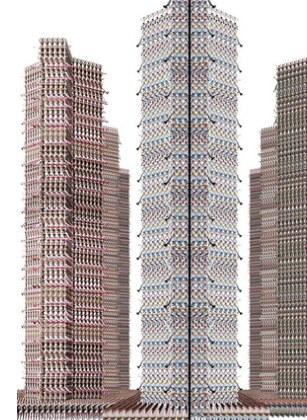 See the project
DENCITY, Seoul
See the project
DENCITY, Seoul
I have thought about that a great deal lately. A whole city with the architecture taken away, and what is left standing is the people. It is not a bad way to think about the years ahead of her.
The proof of that is on paper. A series of Korean subjects stopped me when I saw them…the tiled eaves of the hanok rendered in colored pencil, an earthenware pot resting on brick-and-stone steps, a graphite study of curved roof tiles so patient you can count them, each decorative end-cap carrying its small stamped blessing. They come from a place our family knew well.
When the children were young, we spent our summers in Seoul, on the grounds of the Yun Posun house in Anguk-dong…the grand 1870 hanok of the second president of South Korea, so large it was once called a palace, and now a national historic site. Yun Po-sun had a deep affinity for the West…he took his Master of Arts at the University of Edinburgh, and his home is still remembered for the way traditional Korean architecture on the outside met Western design within, the two living together under one roof. His family carried that same spirit, and they welcomed us with open arms. Amanda knew that house across many summers, from a small girl into a young woman. She did not just visit it. She drew it.
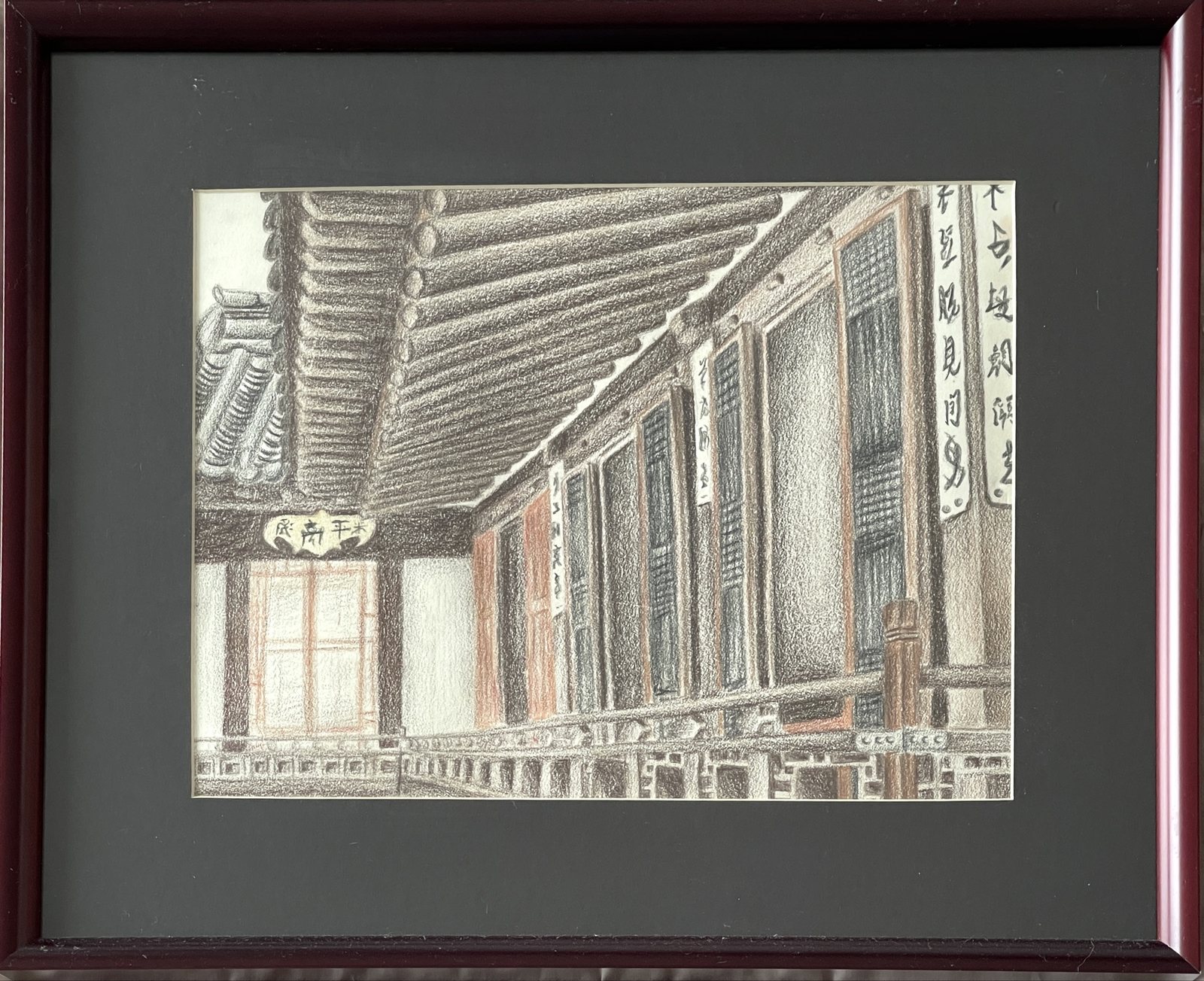
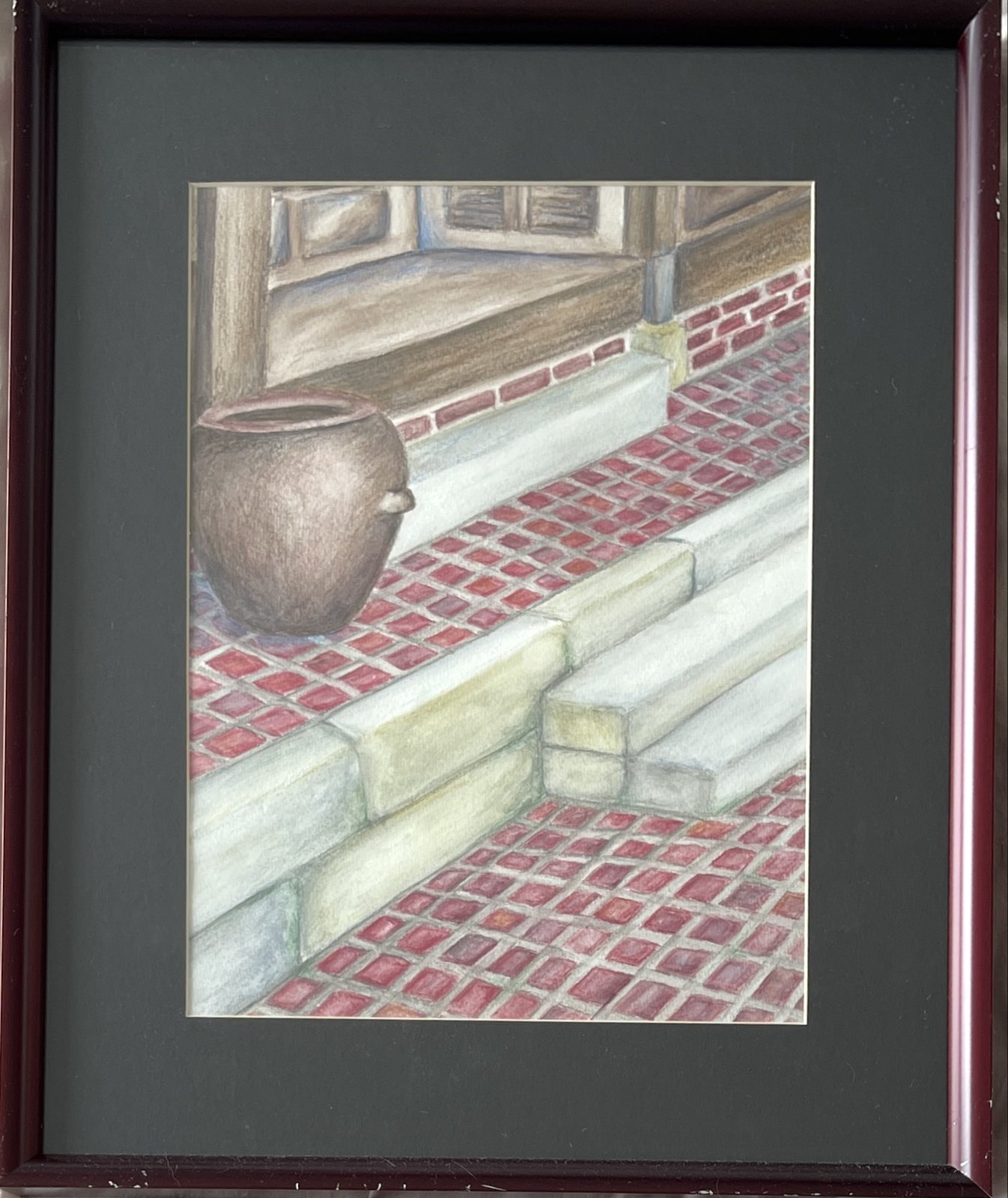
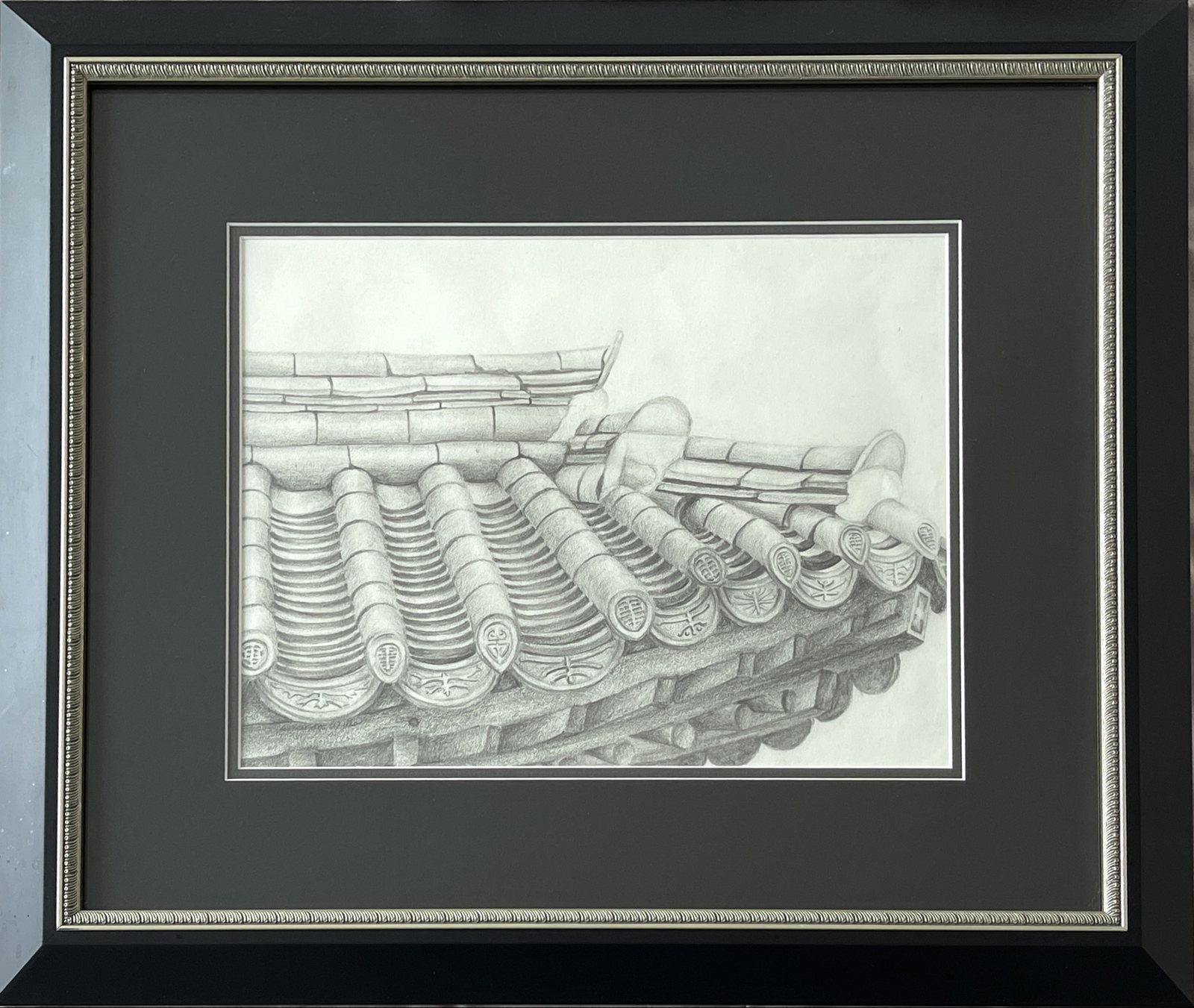
I spent five years working on the ground in Seoul, and yet she rendered its architecture tile by tile, the way you can only render something you have chosen to truly look at. There is more of me in that than I have any right to claim.
That graphite study of the roof came at a turning point. She drew it for her portfolio to the Rhode Island School of Design, and RISD accepted her. One of the finest art schools in the country opened its door, and my daughter, the artist, chose IIT and architecture instead. She did not turn away from art. She folded it into something with walls and doorways, clients and a license. She kept the artist and gave her the discipline of the profession.
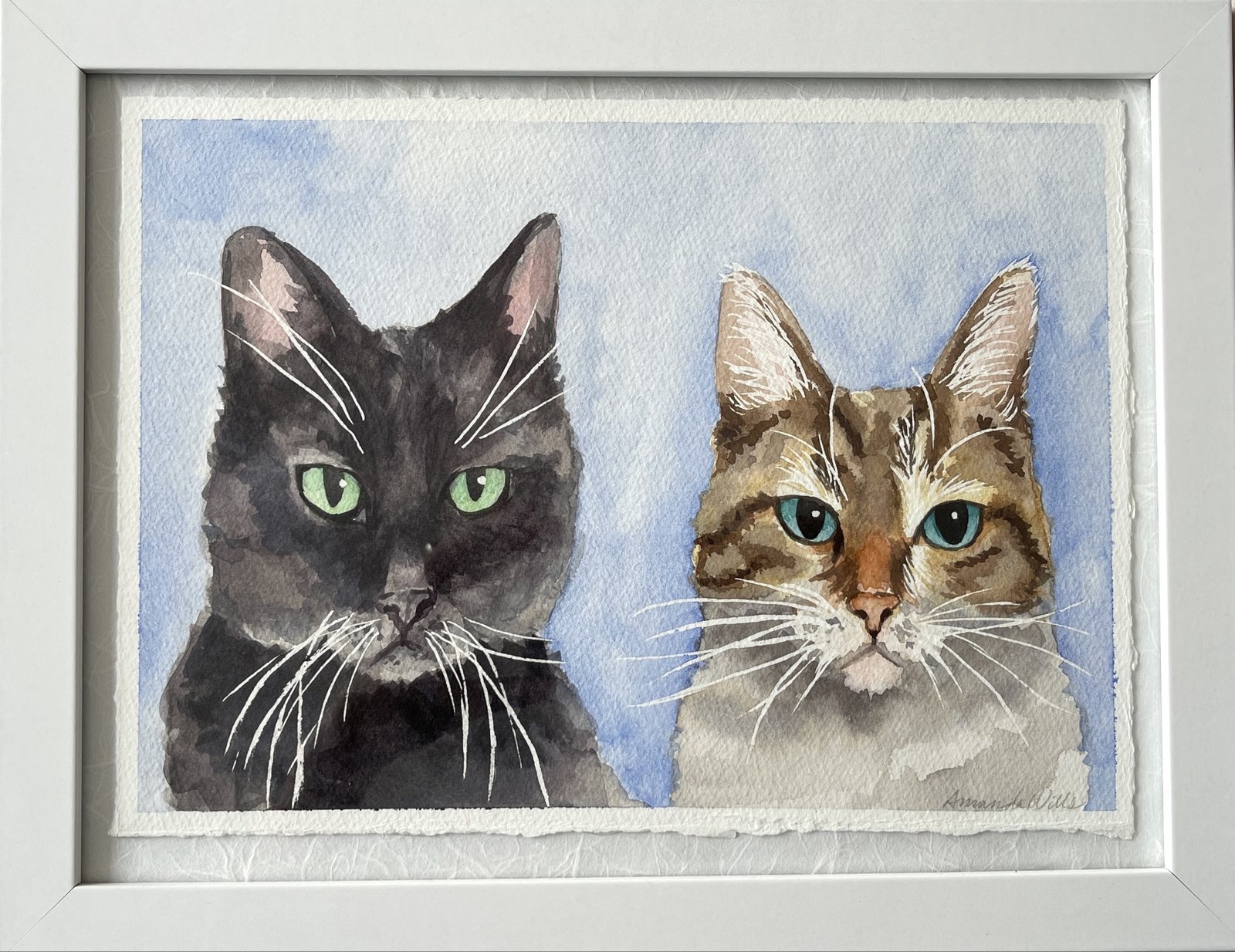
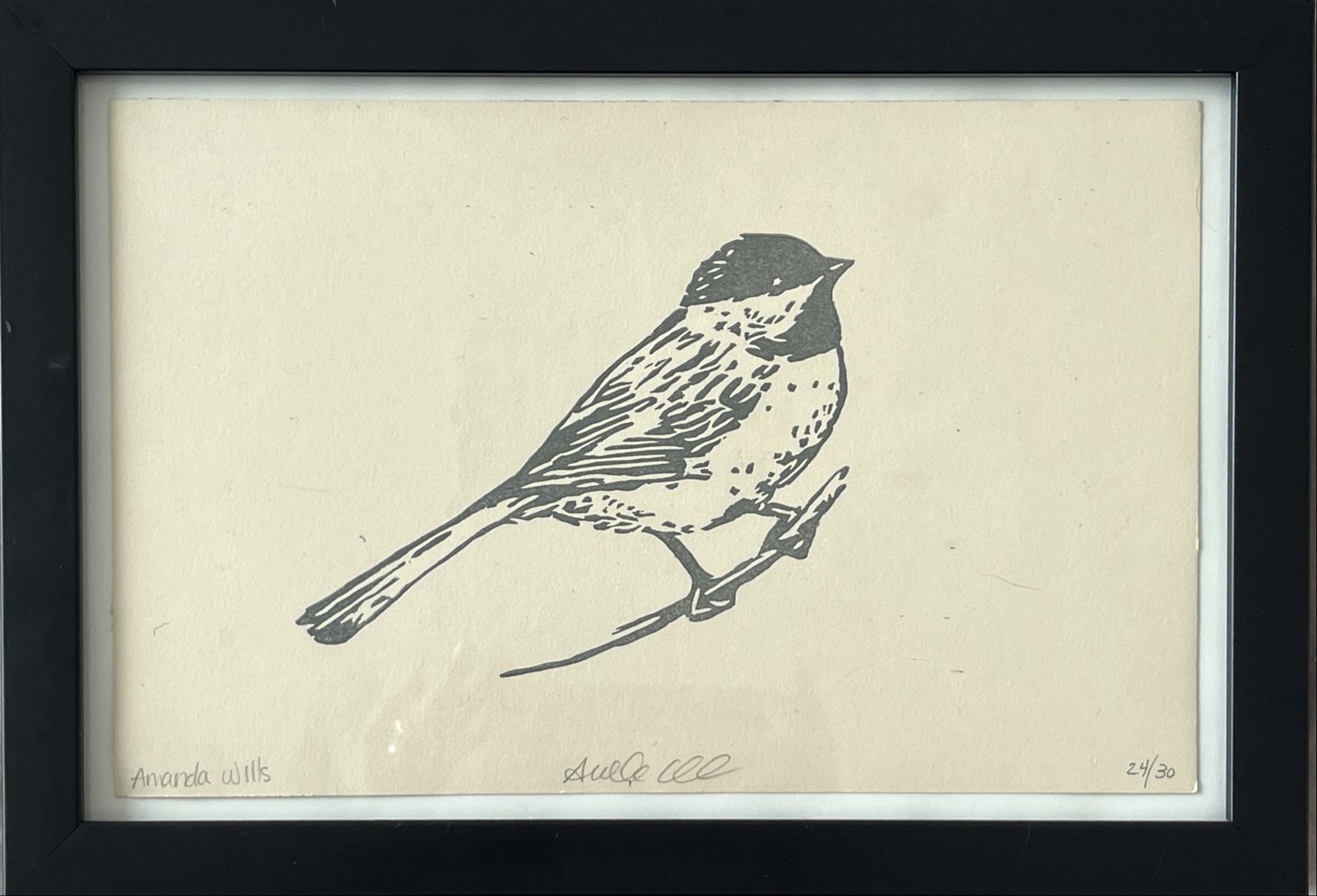
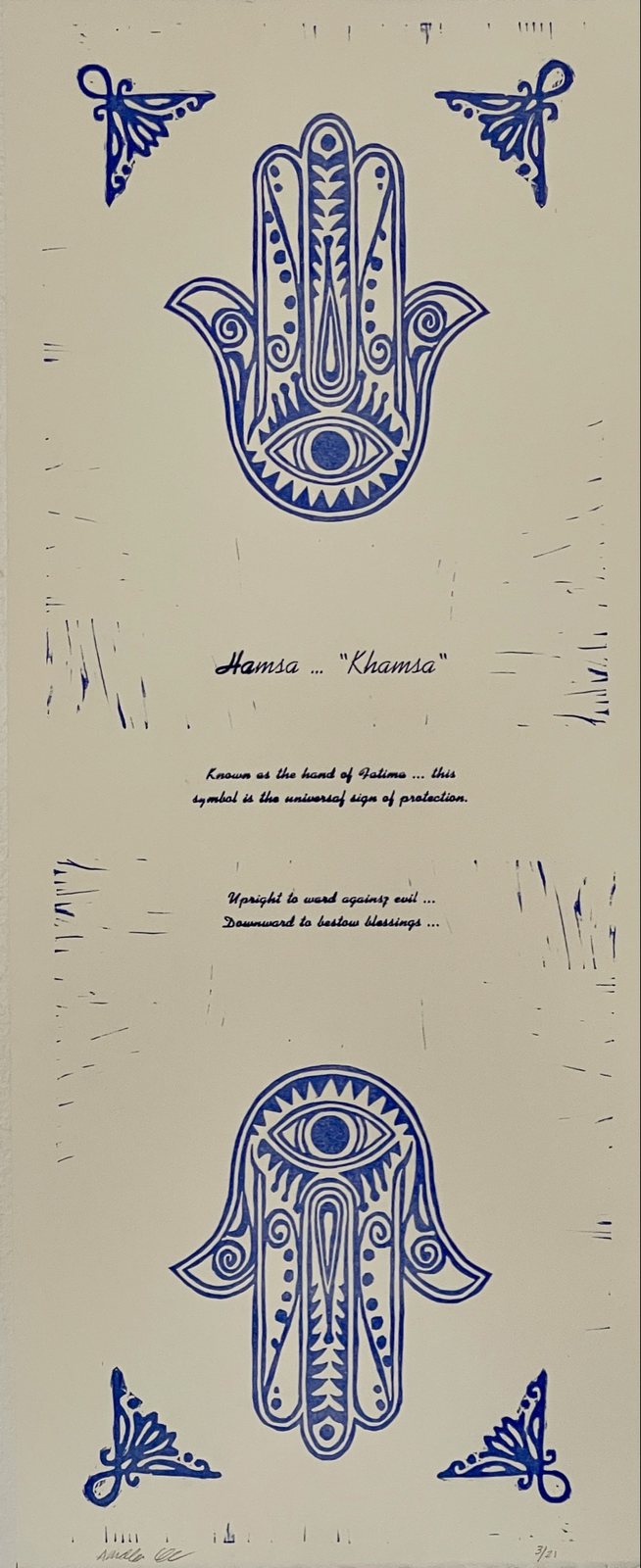
And she still makes things by hand beyond that one place. A watercolor of Damien and Marley, our two cats, every whisker lifted from the wet paper. Amanda painted them for Lyra and me. The cats themselves were a gift from her sister Alexandria, who gave them to us when she left for New York to learn the craft of shoemaking…one daughter’s hands making a home for another daughter’s. Block prints Amanda carved and pulled herself, editioned and numbered, a chickadee, a Hamsa.
That is the word I keep coming back to with her. Work. She is a hard worker in a way that has become almost unfashionable to admire…craft, discipline, grit. She does not talk about hustle. She does the hours. When I ask her about the thing everyone her age seems to be asking about…artificial intelligence, and whether it will hollow out the work she has trained so long to do…she is not worried. Not defiant, not naive. Simply unbothered.
For a while that puzzled me. Her peers are anxious. The discourse is full of dread about who will still be needed. And here is my daughter, early in her career, serenely unconcerned. I have come to understand why.
The parts of her work that are automatable were never the point. The parts that matter are the parts that took years to earn.
What Amanda does cannot be shortcut. A model can generate a floor plan in seconds. It cannot stand in a half-built retail space at seven in the morning and feel that the ceiling is six inches too low. It cannot carry the accumulated judgment of a hand that has painted, curated, apprenticed, and drawn…the judgment that tells you, before you can explain it, that something is not yet right.
This is the quiet argument of her whole way of being, and I think it is the argument of her generation’s best people, though they do not always say it out loud: the answer to the machine is not to fear it, but to be so deeply grounded in craft that the question loses its teeth. The hand, the eye, the years…these are not threatened by a faster tool. They are exactly what the tool cannot replace.
I spent decades helping large companies adopt innovation as a capability, not a campaign. I taught that empathy and human-centered judgment were the durable core, and that everything else was scaffolding. My daughter did not need me to teach her that. She simply built her life on it, and then went to work.
I am proud of her, of course. But more than that, I am learning from her. In an age loud with anxiety about what will remain human, Amanda offers a plainer answer, mostly by not answering at all. She just keeps making things well, with her hands and her attention and her stubborn, quiet grit.
There is a concept I keep returning to…여백…the space intentionally left unfilled, the part of a work that gives meaning to the rest. Looking at Amanda’s life and her craft, I think the same is true. Strip away the noise, the hype, the fear. What remains is the work, and the person doing it well.
That is enough. That has always been enough.
I used a language model to help shape and refine this writing. The thoughts, memories, and point of view are entirely my own.